
Plants and hydrocarbons
Hydrocarbons, ubiquitous chemical elements in our daily lives as a source of energy, represent a major environmental challenge. In this article, we explore the role of hydrocarbons as environmental pollutants and the challenges they pose in terms of soil remediation. We will also look at the innovative approach of depollution by plants, which offers an […]
Hydrocarbons, ubiquitous chemical elements in our daily lives as a source of energy, represent a major environmental challenge. In this article, we explore the role of hydrocarbons as environmental pollutants and the challenges they pose in terms of soil remediation. We will also look at the innovative approach of depollution by plants, which offers an ecological and effective alternative to the harmful effects of hydrocarbons.

HYDROCARBONS
Hydrocarbons are chemical compounds consisting solely of carbon and hydrogen atoms. They are commonly associated with fossil energy resources such as oil, natural gas and coal. They are used as sources of energy and raw materials in various industrial sectors. Their dispersion in the environment can transform them into harmful pollutants, causing ecological damage and posing risks to human health.
UNDERSTANDING THE IMPACT ON OUR ENVIRONMENT
Imagine an abandoned parking lot. When we consider demolishing an abandoned parking lot, we have to consider the environmental impact of this action. The process of stripping the soil requires its complete removal, followed by transportation to a treatment center for processing, and then bringing in another soil for removal. This process generates a significant and negative carbon footprint due to the multiple transports that will be involved. This goes against the principles of ecological responsibility and respect for the environment. In contrast, adopting a more thoughtful approach, such as transforming the abandoned parking lot into a user-friendly green space, reduces the need for soil stripping and treatment. This approach reflects a deeper environmental awareness of the management of our natural resources.


PLANTS AND HYDROCARBONS
Plants can play a crucial role in managing hydrocarbons in the environment. When hydrocarbons are released into the soil or water, plants have the ability to absorb these contaminants and break them down, helping to eliminate them or reduce their toxicity. This ability of plants to interact with hydrocarbons is an important aspect of their role in the biodegradation of pollutants and the restoration of contaminated ecosystems.
SOIL DECONTAMINATION USING PLANTS
Plants have the natural ability to capture organic pollutants such as hydrocarbons, by attaching them to their root systems and aerial parts. Some plant species are even capable of degrading these organic pollutants, thereby helping to decontaminate the soil. As for inorganic pollutants such as nitrates and mineral pollutants, plants act by capturing but not destroying them. In this case, it is necessary to uproot the contaminated plants and treat them later, or opt for soilless cultivation techniques that limit soil contamination while allowing the plants to be reused for other applications. This environmentally-friendly method offers an effective alternative to conventional soil decontamination techniques, while encouraging the natural regeneration of ecosystems.

PHYTODEGRADATION
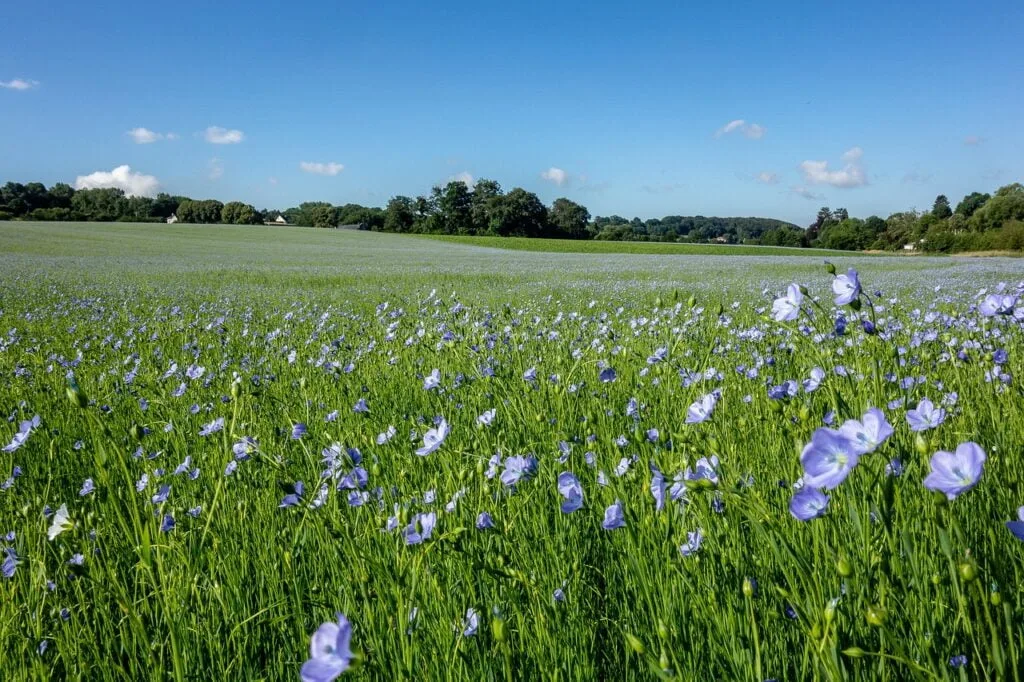
This method of soil decontamination relies on the use of plants to absorb and degrade contaminants present in the soil. This ecological approach exploits the ability of plants to clean up their environment by absorbing pollutants through their root systems. By using plants to absorb and degrade contaminants, this natural, non-invasive approach promotes the regeneration of contaminated ecosystems.
Limitations: Although phytodegradation can be useful for removing inorganic contaminants, it may require more time for this application.
©Baugaarden Living Art
PHYTOSTABILIZATION
Phytostabilization is also a method of soil decontamination, stabilizing contaminants in the soil by making them less mobile and preventing them from dispersing into the environment.this method uses specific plants that have the ability to bind contaminants in the soil through their roots, making them less available for uptake by other organisms or for dispersal into the air or water.
In a nutshell, phytostabilization aims to keep contaminants in the soil to prevent their dispersal, while phytodegradation seeks to break down contaminants to eliminate them or make them less harmful.
Limitations: Similarly, although phytostabilization can stabilize contaminants, it cannot eliminate them completely.
©BaugaardenLiving Art, our partner in woven willow.

Hydrocarbons, omnipresent in our daily lives as sources of energy and raw materials, present a major challenge for the environment. Their accidental spillage or uncontrolled use can lead to ecological damage and risks to public health. By adopting a more thoughtful approach to the management of our natural resources, such as recycling abandoned sites into green spaces, we can help to reduce our environmental footprint. What’s more, by making ingenious use of plants to clean up hydrocarbon-contaminated soils, and combining this with our commitment to preserving the planet, we can advance our fight against this form of pollution while ensuring a sustainable future.